Phoenix Day Tours
I’m Serious Day Tour Man AI, your day trip expert. Ask me anything — where to go, how to get there, and what’s actually worth your day.
Phoenix’s day trips are governed by one number — the summer thermometer — and one legend: the road through the Superstition Mountains that closed for five years and reopened with a warning sign no ordinary state highway carries. The heat rules come first below, because from May through September they decide everything: hikes happen at dawn, canyons happen in the morning, and the middle of a summer day goes to museums and misters.
The lineup: Sedona’s red rocks two hours north, the Grand Canyon audited honestly as the marathon it is, a cliff dwelling and a ghost town up the Verde Valley, Tucson’s saguaro forests south, and that reopened Apache Trail — with the fine print stated plainly.
Here’s what’s worth a day, with real times and honest trade-offs.

Popular Day Trips
Sedona
The Two-Hour Drive, the 8am Trailhead Rule
Grand Canyon
The Six A.M. Rule, the South Rim in a Day
Montezuma Castle & Jerome
The Corrected Name, the Hill That Wouldn’t Die
Sedona — The Red Rock Standard
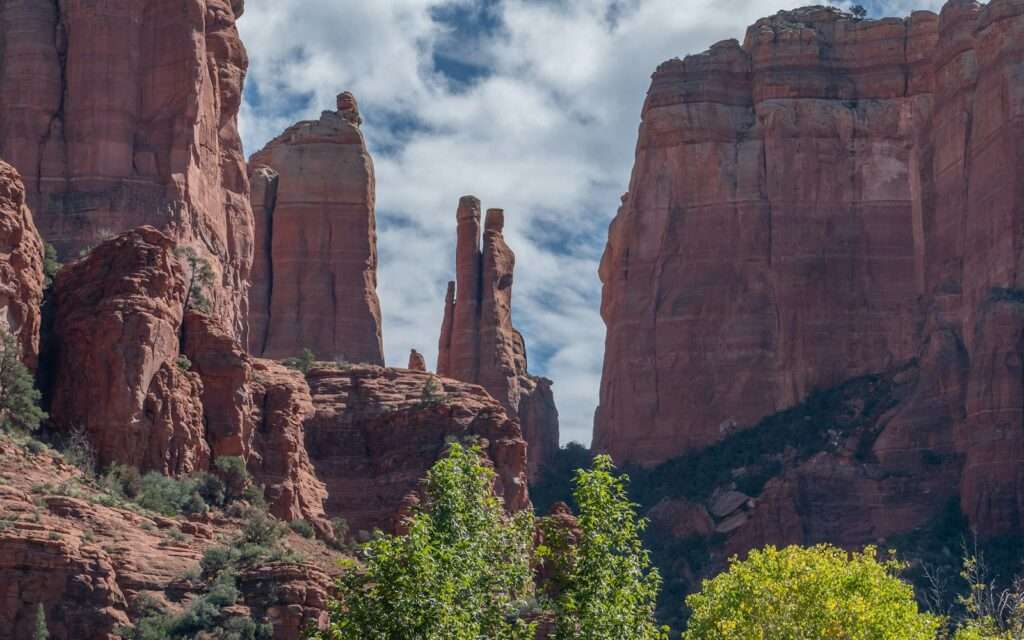
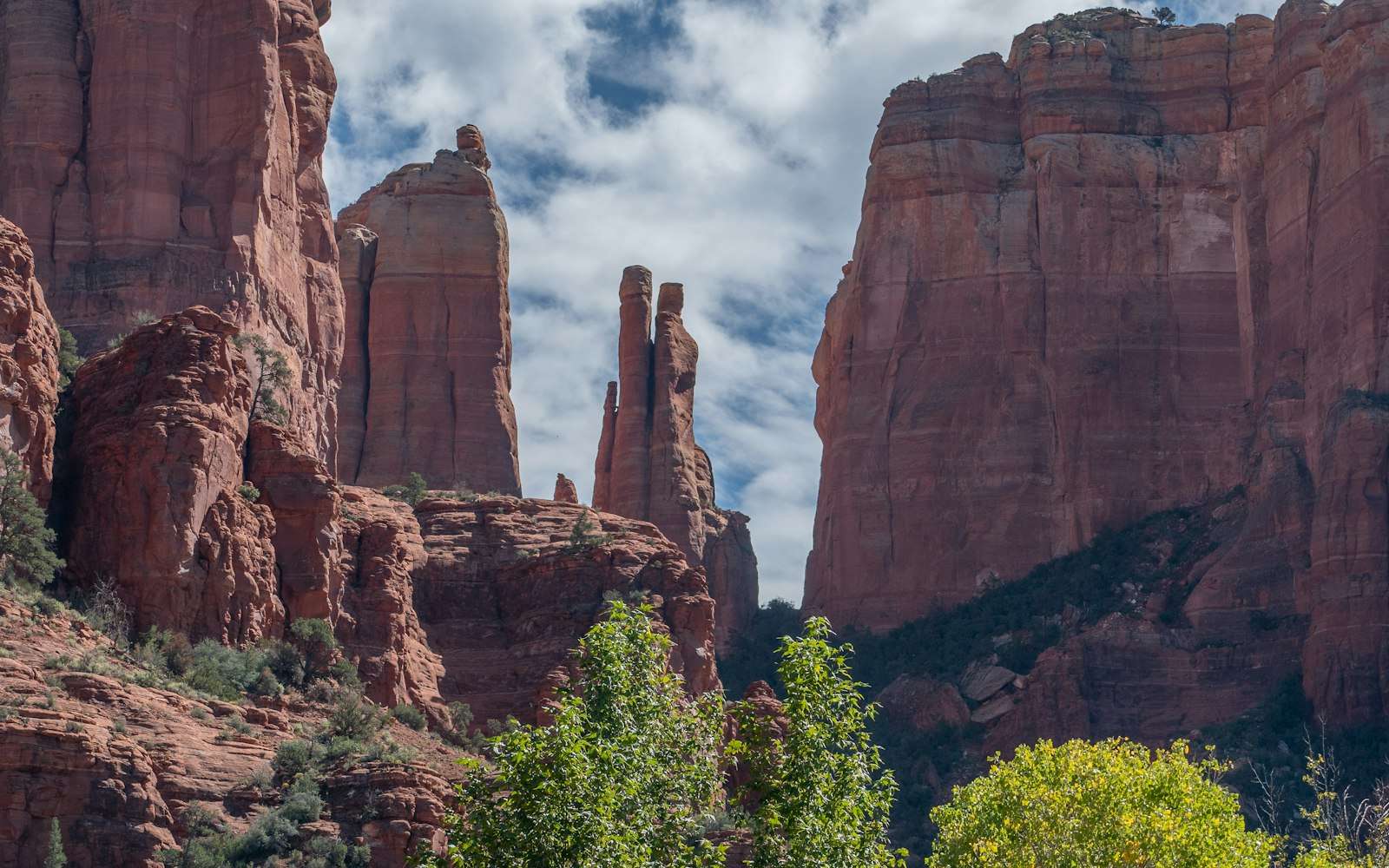
Two hours north, Sedona is the region’s best day trip and it isn’t close: red sandstone formations rising out of juniper country, with a trail network that serves every fitness level and a light show at both ends of the day.
The circuit: Cathedral Rock at golden hour is the famous scramble — short, steep, and worth the traffic it draws — while Devil’s Bridge supplies the stand-on-the-arch photo (the walk is longer than the photo implies) and Airport Mesa delivers the 360-degree sunset for the effort of a parking spot. The Chapel of the Holy Cross, built into the rock itself, is the free architectural stop. Know the parking reality: trailhead lots fill by mid-morning year-round, the Red Rock Pass covers most of them, and the seasonal shuttle serves the busiest trailheads for good reason.
The vortex question, answered honestly: the “energy vortex” sites are a New Age tradition, not a measurable phenomenon — and the spots chosen (Cathedral Rock, Bell Rock, Airport Mesa) happen to be genuinely beautiful places to sit still, which is its own explanation. Take the jeep tours for the backcountry the sedans can’t reach, add Oak Creek’s swimming holes in summer — Slide Rock’s natural chute is the family classic — and drive the switchbacks of Oak Creek Canyon toward Flagstaff for the finish. Full day; leave Phoenix by 7 to beat both heat and lots.
Read the full Sedona day-trip page.
The Grand Canyon — The Marathon Math
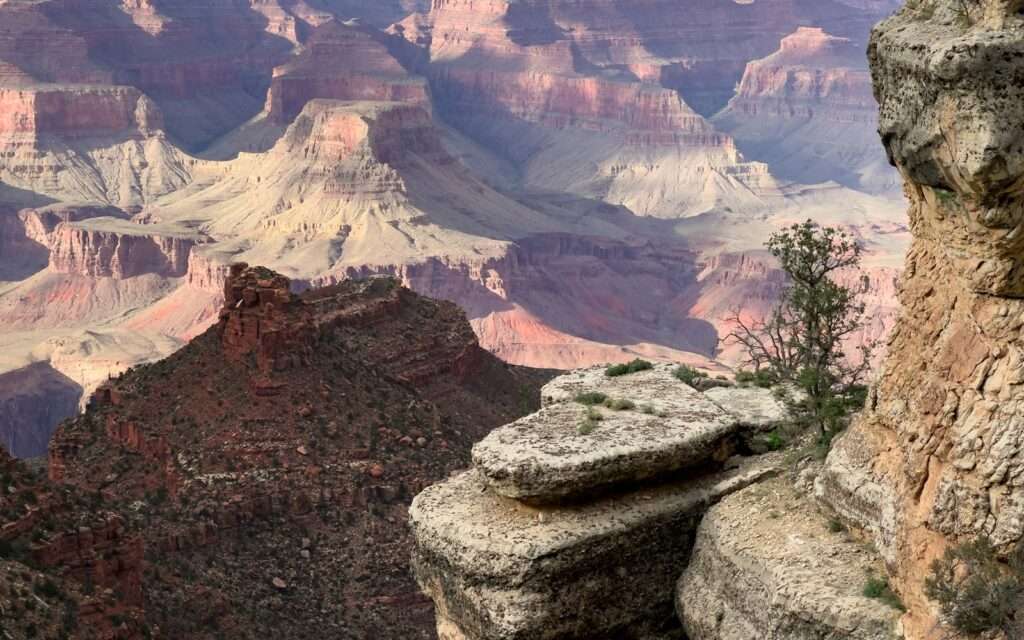
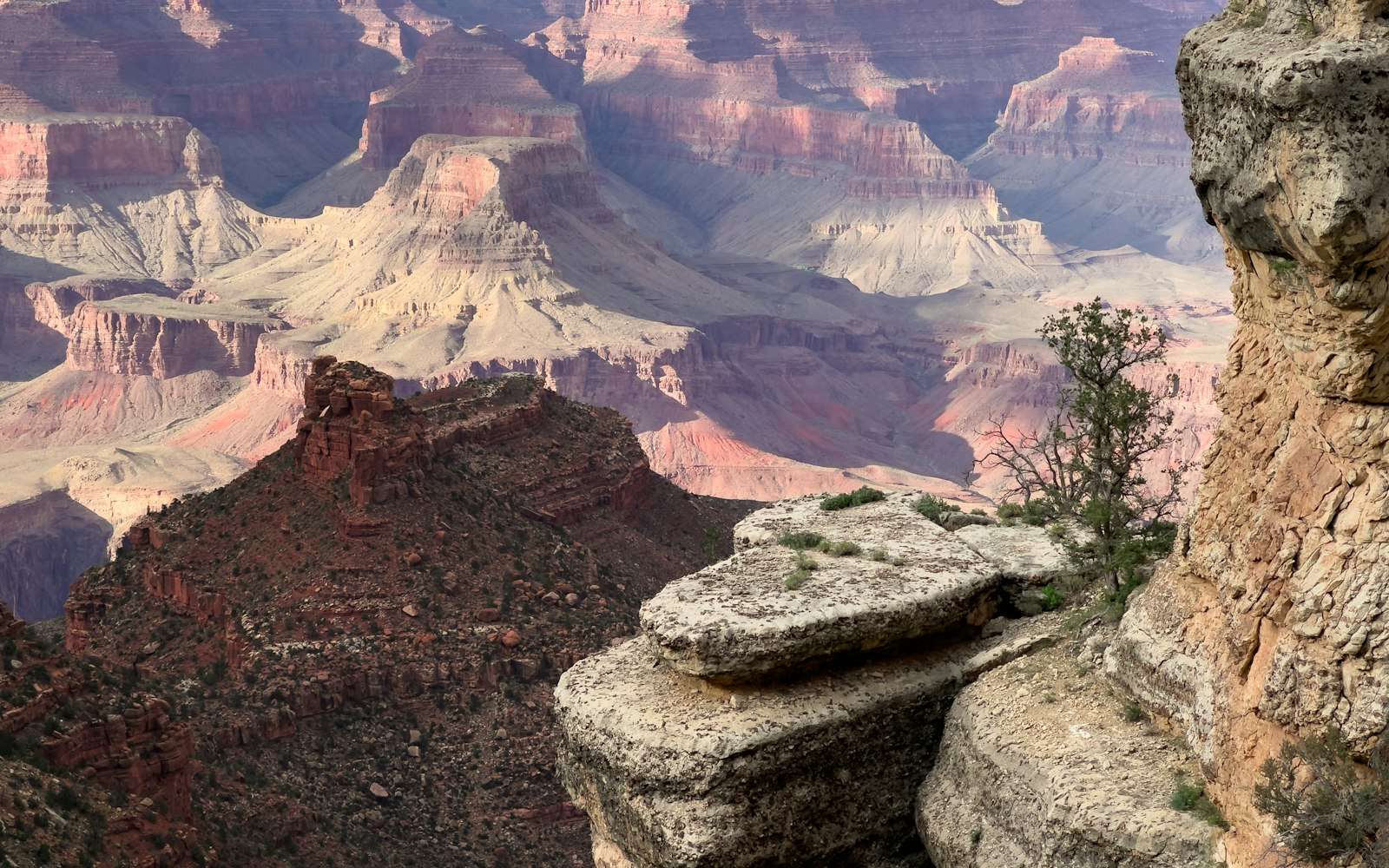
State the math first: the South Rim sits three and a half hours from Phoenix, which makes the day trip an eleven-to-thirteen-hour undertaking with seven of them on the road. It’s done every day, and it works — but know what you’re buying: roughly three to four hours at the rim itself.
Spend those hours right. Enter at the South Entrance, park once, and use the free shuttles: Mather Point for the arrival panorama, the Rim Trail walk toward Yavapai Geology Museum for the crowd-thinning stroll, and Hermit Road’s overlooks (shuttle-served most of the year) for the afternoon light. The park entrance fee is per vehicle; no reservation is currently required for day entry at the South Rim, but summer midday entrance lines are real — another argument for the early start.
The upgrade: an overnight, sunset and sunrise at the rim, is the trip the canyon calls for, and Williams’ Grand Canyon Railway adds the vintage-train format. The rules: do not attempt rim-to-river-and-back in a day (the signs mean it; rangers rescue optimists weekly in summer), carry water even for rim walking, and remember the rim sits at 7,000 feet — it’s cooler than Phoenix by 20-plus degrees and snow-dusted in winter, which surprises desert-dressed visitors every year.
Read the full The Grand Canyon day-trip page.
Montezuma Castle, Jerome & the Verde Valley — The History Stack
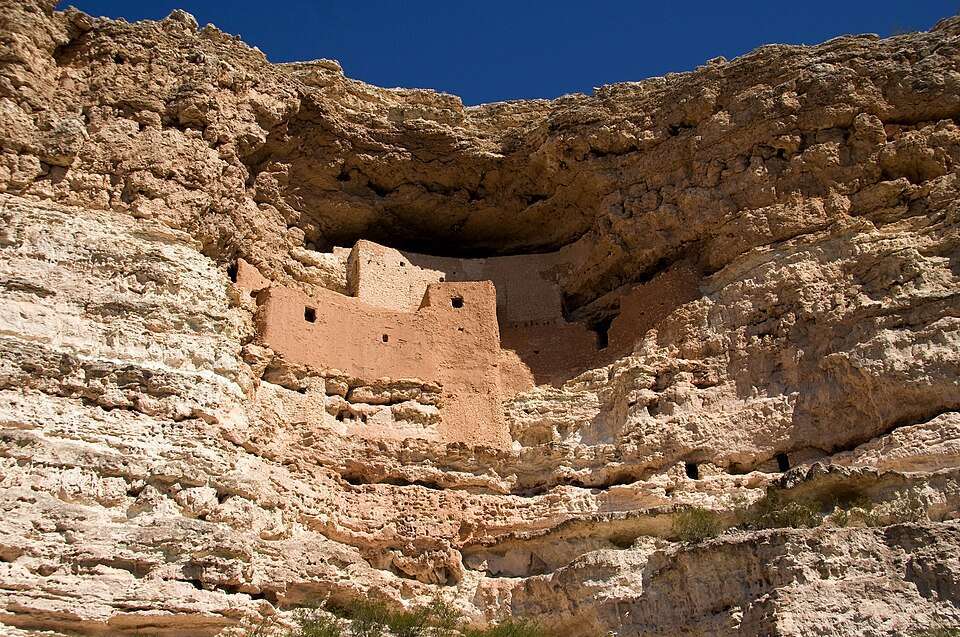
The I-17 corridor north stacks three eras into one relaxed day. Montezuma Castle National Monument, an hour up, is the five-story Sinagua cliff dwelling tucked into a limestone alcove — misnamed by settlers who guessed Aztec, occupied for centuries before Montezuma was born, and viewable from a flat, shaded ten-minute loop that makes it the easiest great ruin in the Southwest. Montezuma Well, the detour, adds the spring-fed sinkhole with its own dwellings.
Jerome, forty minutes on, is the copper-boom town stitched into a 30-degree hillside — once “the wickedest town in the West,” then a near-ghost town of fifty souls, now an artist-and-saloon economy where the buildings visibly lean and the mine museum explains why the whole hill is hollow. The Douglas Mansion state park tells the boom-and-bust story properly, and the sliding jail — which has migrated downhill 200 feet since the ground gave way — is the town’s best physical punchline.
The Verde Canyon Railroad out of Clarkdale adds the wilderness-by-rail four hours (bald eagles in winter), and Cottonwood’s Old Town supplies the wine-tasting rooms of Arizona’s improbable-but-real Verde Valley wine country. Half to full day, gentle throughout, and the summer escape: everything here runs 15 degrees cooler than Phoenix.
Read the full Montezuma Castle & Jerome day-trip page.
Tucson & the Saguaro Country — The Desert Day
Two hours south, Tucson’s day is the Sonoran Desert done properly. The Arizona-Sonora Desert Museum is the anchor and the region’s best single ticket: part zoo, part botanical garden, part natural history museum, almost entirely outdoors — mountain lions, the walk-in hummingbird aviary, and the raptor free-flight demonstrations (seasonal, mornings) where Harris’s hawks pass close enough to part your hair. Go at opening; the animals and the temperature both favor it.
Saguaro National Park brackets the city in two districts: the west district adjoins the Desert Museum, and its Bajada Loop drive puts you inside the densest giant-cactus forest anywhere — the saguaros here are the ones every Western ever filmed, individuals two hundred years old with a dozen arms. The east district serves the longer hikes.
The stack: San Xavier del Bac, the “White Dove of the Desert” — the 1797 mission still serving the Tohono O’odham community, and the finest Spanish colonial church in the country — plus Tucson’s own eating claim: a UNESCO City of Gastronomy whose Sonoran hot dog is the street-food argument. Full day with the drive; in summer, it’s the Desert Museum at opening, indoors by noon.
The Apache Trail — Reopened, With Fine Print
The historic road through the Superstition Mountains — built to supply Roosevelt Dam’s construction, finished 1911 — closed at Fish Creek Hill in 2019 after fire-scar flooding buried it, and reopened in September 2024 after a $4 million interim repair. The fine print is the state’s own signage: the five unpaved miles between Fish Creek Vista and the Reavis Trailhead turnoff carry the warning “PRIMITIVE ROAD — No Trailers, 4-Wheel Drive and UTVs Only.” That stretch — steep, narrow, cliff-edged, and re-sculpted by every storm — is not for rental sedans, and the transportation department means it.
The formats: in an ordinary car, drive the paved section from Apache Junction past Canyon Lake to Tortilla Flat — the six-building stagecoach stop with the saddle barstools — and turn around; that’s most of the scenery at none of the risk. With genuine high-clearance 4WD and dry weather, the full run to Apache Lake and Roosevelt Dam is one of the Southwest’s great drives again. Boaters and trailers reach Apache Lake from the east via SR-188. Check current conditions on the state’s 511 system before committing; storms change the road.
Add the Superstition Mountain framing: the Lost Dutchman’s gold legend, Lost Dutchman State Park’s Treasure Loop for the dawn hike, and Goldfield Ghost Town’s cheerful staged version of the mining past for families. Cool months only for the hikes; the Superstitions in July are an oven with scenery.
The Heat Rules, Camelback & Phoenix Itself
The rules, because May through September they’re structural: hike at dawn or don’t hike — trailheads for Camelback and Piestewa Peak fill before sunrise in summer, and the city closes some trails on extreme-heat days because rescues were becoming a schedule. A liter of water per hour of summer hiking is the ranger math. Midday goes to the indoors, and the desert punishes improvisation.
The city’s own circuit: the Desert Botanical Garden — saguaro-and-wildflower curation with the Chihuly-style light events in season — and Papago Park’s Hole-in-the-Rock for the easiest sunset in town. The Heard Museum is the country’s premier Native American art institution, and its interpretation sets up every ruin and mission above. Taliesin West, Frank Lloyd Wright’s winter camp in Scottsdale, runs the architecture tour worth booking ahead. Old Town Scottsdale supplies the resort-adjacent evening; Roosevelt Row’s murals supply the local one.
The season math, inverted from most cities: October through April is the glory window — 75 degrees and cloudless while the rest of the country shivers, which is exactly when the resorts price accordingly. Summer is the value season for a reason, survivable on the dawn-and-indoors rhythm, and spring training in March fills every stadium and hotel. The citrus-and-carne-asada eating scene lives in the strip malls; the best Mexican food in town rarely has a patio.
Frequently Asked Questions
Is the Grand Canyon doable as a day trip from Phoenix?
Yes, as an eleven-to-thirteen-hour marathon: seven hours of road around three to four at the rim. Leave by 6, use the shuttles, and know the overnight version is the honest upgrade.
Can you drive the Apache Trail now?
It reopened in September 2024, but the five miles at Fish Creek Hill are signed “4-Wheel Drive and UTVs Only” — no trailers, no rental sedans. Regular cars should drive the paved stretch to Tortilla Flat and turn around.
Are the Sedona vortexes real?
They’re a New Age tradition, not a measurable phenomenon — and the sites are genuinely beautiful places to sit still, which explains their staying power. Go for the trails and light; take whatever else finds you.
When is it too hot to hike in Phoenix?
Summer middays, full stop — hike at dawn, carry a liter per hour, and respect the trail closures on extreme-heat days. October through April, the desert is perfect and the rules relax.
Is Tucson worth the drive from Phoenix?
Yes — the Desert Museum is the region’s best single ticket, and the west Saguaro district next door is the densest cactus forest anywhere. Arrive at opening, especially in summer.